
SERPLYWOOD · CORE GUIDE
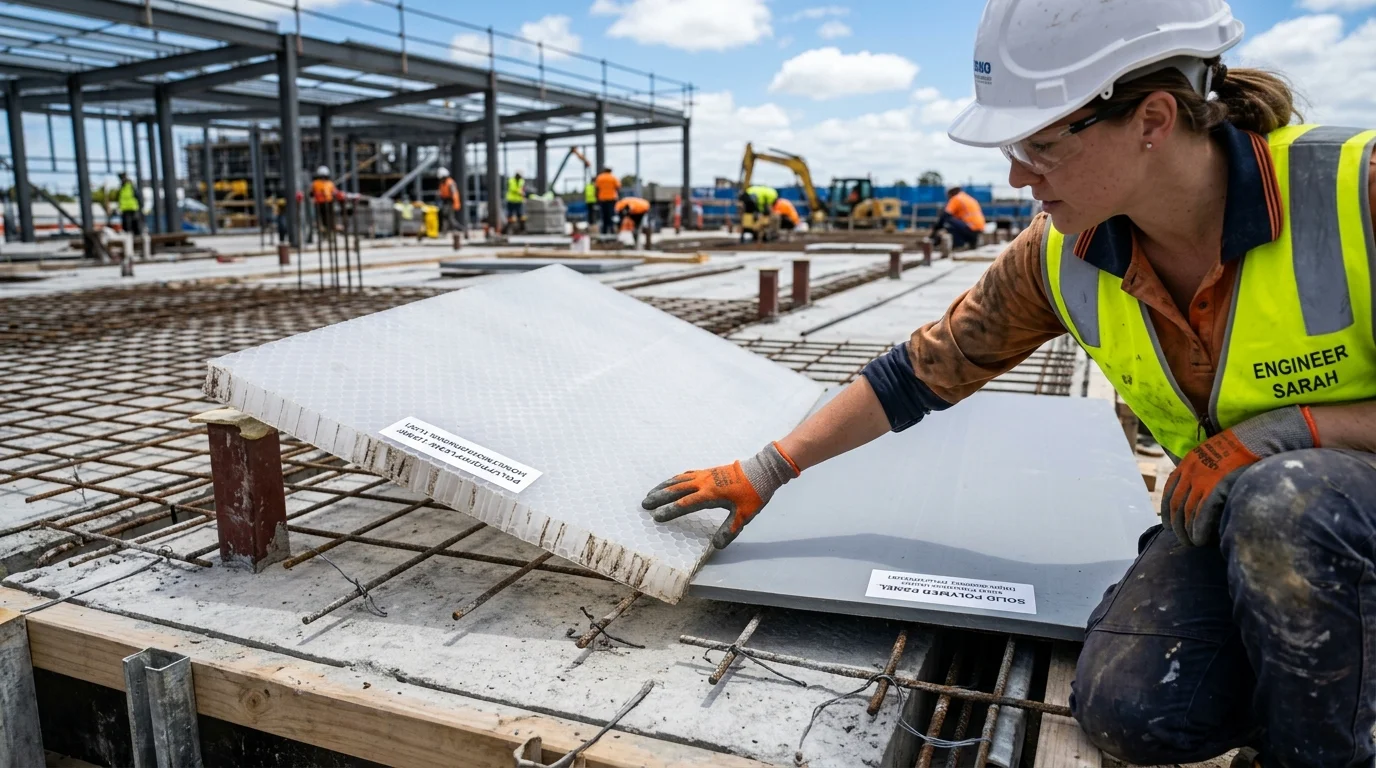
As polymer-based formwork boards replace film-faced timber plywood globally, civil contractors frequently compare Polypropylene (PP) and Polyvinyl Chloride (PVC) panels. While both guarantee zero moisture swelling and high pouring repetitions, their structural densities, cold-temperature ductility, and recycling economics differ radically.
Polypropylene (PP) Copolymer: Engineered with a cellular honeycomb hollow core bounded by dense solid polymer faces. This maximizes the cross-sectional moment of inertia while cutting panel dead weight by over 50%.
PVC Formwork: Typically manufactured as a dense solid or compact foamed matrix. While stiff, it possesses high specific gravity that increases physical fatigue on site.
For a standard 18 mm sheet measuring 1250×2500 mm (3.125 m²):
PVC has a glass transition temperature around +75°C to +80°C, meaning it operates in its glassy-brittle state at ambient conditions. Below +5°C, and particularly in sub-zero winter pours, PVC becomes brittle; heavy concrete vibrator strikes or corner drops risk cracking and fracture.
In contrast, block copolymer PP retains flexibility and impact absorption down to -20°C, making it the preferred choice for all-season construction.
PVC contains approximately 57% chlorine by weight. Exposure to hot rebar welding or site fire generates caustic Hydrogen Chloride (HCl) fumes. Polypropylene contains only carbon and hydrogen, burning cleanly without halogen acids. Furthermore, SerPlywood offers guaranteed buyback for used PP sheets, creating a zero-waste closed loop.
| Parameter | SerPlywood Cellular PP | Solid / Foamed PVC | Engineering Verdict |
|---|---|---|---|
| Weight (18mm, 1.25×2.5m) | 32 – 35 kg | 65 – 75 kg | PP 50% Lighter |
| Sub-Zero Impact (-15°C) | Ductile & Crack-Free | Embrittlement Risk | PP Superior |
| Edge Nailing Split Risk | Zero (Elastic grip) | Moderate near edges | PP Superior |
| Water Absorption | 0.00% | 0.00% | Tied (Both water-impervious) |
| Toxic Fume Emission | Halogen-Free | Corrosive HCl gas | PP Safer for Jobsite Crew |
| Scrap Buyback Value | High (Circular Economy) | Very Low | PP Financially Superior |
| Typical Pour Life | 60+ Pours | 35–50 Pours | PP Longer Lifecycle |
Receive an 18mm polymer sample panel and certified laboratory test certificates directly to your office.
معلومات وافية عن اختيار الألواح، مرات الاستخدام، الفحوصات الفنية والشحن الدولي.
هو مصطلح تجاري شائع يطلق على الألواح البوليمرية المستخدمة كأوجه لقوالب صب الخرسانة. عند تقييم المنتج، ينبغي فحص نوع البوليمر (PP أو PVC) والهيكل الداخلي والمقاسات وتعليمات الاستخدام معاً.
لا، تتوفر في الأسواق ألواح من PP وPVC ومركبات بوليمرية أخرى. يوضح عرض السعر المقدم من SerPlywood نوع البوليمر الدقيق وهيكل المقطع العرضي بوضوح تام.
ليس بالضرورة؛ فهناك منتجات هجينة تتكون من طبقات خشبية مكسوة بطبقة بوليمر خارجية. ويجب التمييز بدقة بين مادة القلب والسطح الخارجي. تقدم SerPlywood ألواحاً بوليمرية متجانسة بالكامل.
السماكة بمفردها لا تكفي للحكم على الملاءمة؛ بل يجب دراسة بنية البوليمر، وضغط الخرسانة الطازجة، والمسافات بين دعامات H20، وطريقة التثبيت ضمن الحسابات الإنشائية للقالب.
تصل الألواح في العادة إلى ما بين 40 و80+ صبة خرسانية، ويعتمد ذلك على دقة العمالة وطريقة فك القوالب والتخزين السليم في موقع المشروع.
يتم التوريد المحلي عادة بالمنصة الكاملة (حوالي 40-50 لوحاً)، في حين يتم التصدير بالحاويات الكاملة 20 أو 40 قدماً. يمكنكم التواصل مع فريق المبيعات لبحث متطلبات المشاريع الخاصة.
أرسل الأبعاد المطلوبة والسماكة والكمية التقديرية ومكان التسليم لطلب عرض توريد مفصل وواضح.