GUIDE 03 · SITE ENGINEERING

Achieving 60+ Pours with Polymer Formwork: Jobsite Handling, Nailing & Stripping Standards

Author: İdris YAĞMAHAN / Mimar (Architect) Published: 07/05/2026 Read Time: 8 minutes Category: Field Operations
Achieving 60+ Pours with Polymer Formwork
Resumen Técnico del Tablero
Parámetros Certificados de Obra
Hedef Döküm Sayısı 50 – 70+ Pouring Cycles 18 mm Standard; 21 mm: 60-80+
Destek Açıklığı 25 – 30 cm Joist Spacing Deflection Control L/400
Çivileme & Sabitleme Standardı Min 20 mm from edge / Countersunk screws
Kalıp Söküm Ekipmanı Plastic / Timber Wedges Steel pry bars strictly avoided
Surface Cleaning High-Pressure Water Jet Only Zero chemicals required
Döngü Takip Sistemi Edge Stamping / Color-Coded Pour Logging

1. Cycle Count Myths vs. Jobsite Engineering Reality

Exaggerated marketing claims of 100+ reuses often generate skepticism among structural engineers. Under standard field conditions, timber plywood fails from internal water degradation, whereas polymer formwork longevity depends exclusively on mechanical care. With standard joist spacing and stripping precautions, achieving 60+ pours is routine.

2. 6 Golden Rules to Consistently Exceed 60 Pours

  1. Rule 1 (Joist Centers): Maintain slab support beam centers strictly between 25 and 30 cm.
  2. Rule 2 (Edge Distance): Fasten screws or nails at least 20 mm inward from panel perimeters.
  3. Rule 3 (Vibrator Clearance): Never touch the polymer face directly with needle vibrator heads; keep 10 cm clearance.
  4. Rule 4 (Stripping Tooling): Use plastic mallets and timber wedges; forbid sharpened steel crowbars.
  5. Rule 5 (Pressure Washing): Wash panels with 120-bar water jets immediately upon striking.
  6. Rule 6 (Horizontal Storage): Stack sheets flat on sturdy timber pallets away from uneven ground.

3. Support Spans & L/400 Deflection Criteria

Polypropylene composite boards feature higher toughness with slightly lower flexural modulus than birch plywood. Tightening primary joist centers to 25–30 cm guarantees deflection remains well within the strict DIN 18202 L/400 architectural threshold under wet concrete loads.

4. Fastening Standards: Screws, Nailing, and Spacing

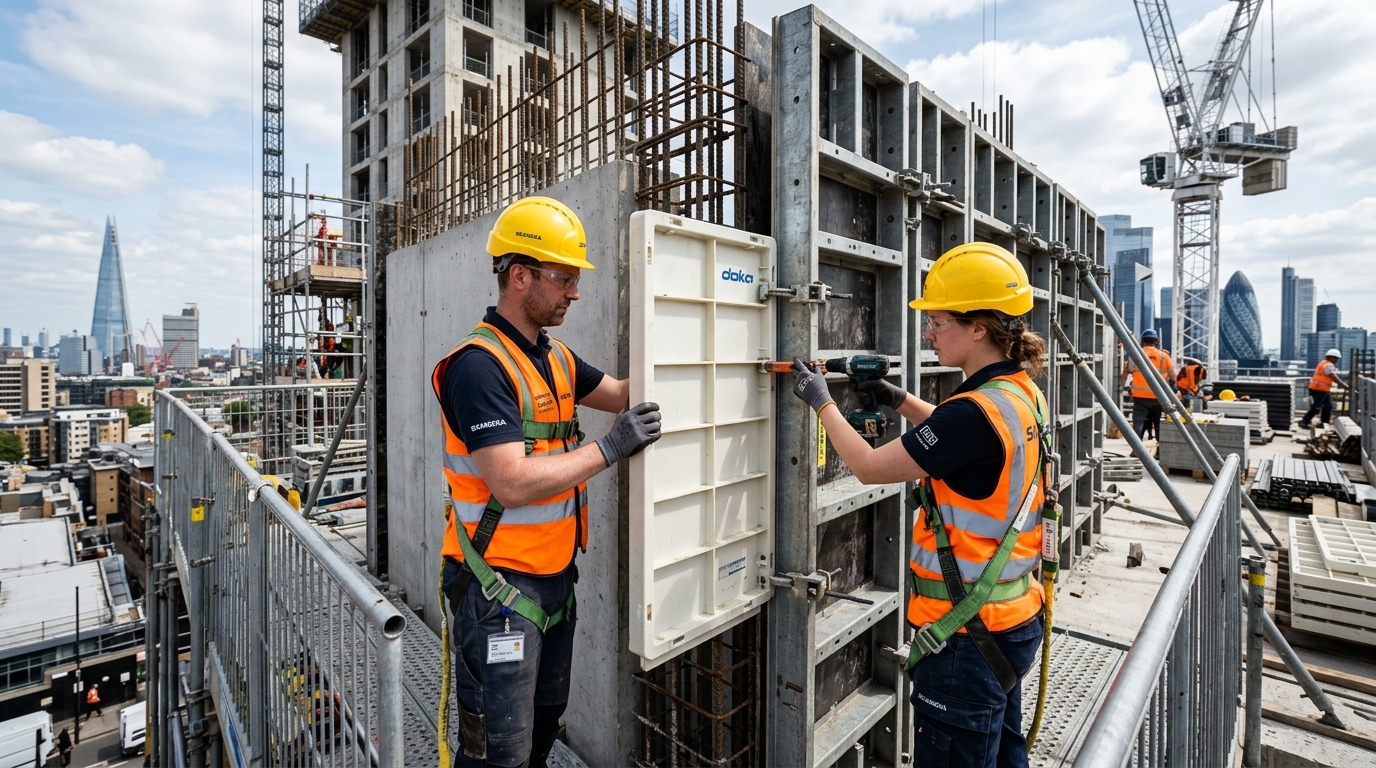
Countersunk screws are highly recommended over round-head nails. Sunk flush with the board's surface, they leave zero impressions on architectural fair-faced concrete and prevent damage during mechanical striking.

5. Demolding Procedures & Pressure Water Washing

Because concrete does not bond chemically to polypropylene, demolding requires minimal effort. Light tapping on corner timber wedges releases the panel cleanly. Cleaning takes seconds with a pressurized water lance.

6. Jobsite PP Hot-Air Extrusion Welding Repairs

Unlike timber which must be scrapped when holed, polymer panels can be hot-welded on site using a handheld Leister tool and polypropylene welding rod, restoring watertight integrity in under 30 seconds.

7. Conclusion & Quality Control Checklist

Investing 15 minutes to brief carpentry crews on proper stripping wedges and joist spacing pays tremendous dividends, enabling panels to cross 60 pours without structural fatigue.

Frequently Asked Questions

Preguntas Frecuentes

Aspectos clave sobre selección de tableros, rotaciones en obra, especificaciones y envíos.

¿Cuántas veces se puede reutilizar un tablero plástico?

Dependiendo del cuidado en obra, el desencofrado y el acopio, los tableros alcanzan habitualmente entre 40 y 80+ puestas de hormigonado bajo condiciones correctas de uso.

¿Cómo evaluar las afirmaciones sobre altos números de reutilización?

Conviene solicitar información sobre las condiciones reales de puesta, soporte y desencofrado. Las cifras deben respaldarse con ensayos de laboratorio y referencias de obra comprobables.

¿Existe una garantía formal sobre el número de usos?

Dado que la vida útil depende del manejo en obra, las operaciones de grúa y el desencofrado, los alcances de garantía técnica se fijan contractualmente en la cotización oficial.

¿Cómo se deben limpiar los tableros tras el desencofrado?

Se recomienda limpiarlos tras el desencofrado con agua a presión o espátulas de plástico/madera. Deben evitarse raspadores metálicos afilados para mantener intacta la cara del tablero.

¿Se puede reparar un tablero dañado en obra?

Sí, arañazos profundos o perforaciones indebidas se reparan de forma sencilla mediante termosoldadura con varilla de polímero o masillas adecuadas, devolviendo la planicidad a la cara.

¿Qué precauciones se deben tomar para el almacenamiento en obra?

Deben apilarse en posición horizontal sobre durmientes planos o sobre sus palets originales. Para acopios prolongados a la intemperie, conviene protegerlos con lonas frente a la radiación solar directa.

SERPLYWOOD · GLOBAL SUPPLY & SALES

Solicite Presupuesto de Tableros Plásticos

Comparta medidas, espesor, cantidad y destino para evaluar un presupuesto con alcance claro.

✓ Precios unitarios y por m² claros ✓ Planificación de entrega en obra ✓ Envío en palets y contenedores ✓ Conformidad con especificaciones
Escribir por WhatsApp