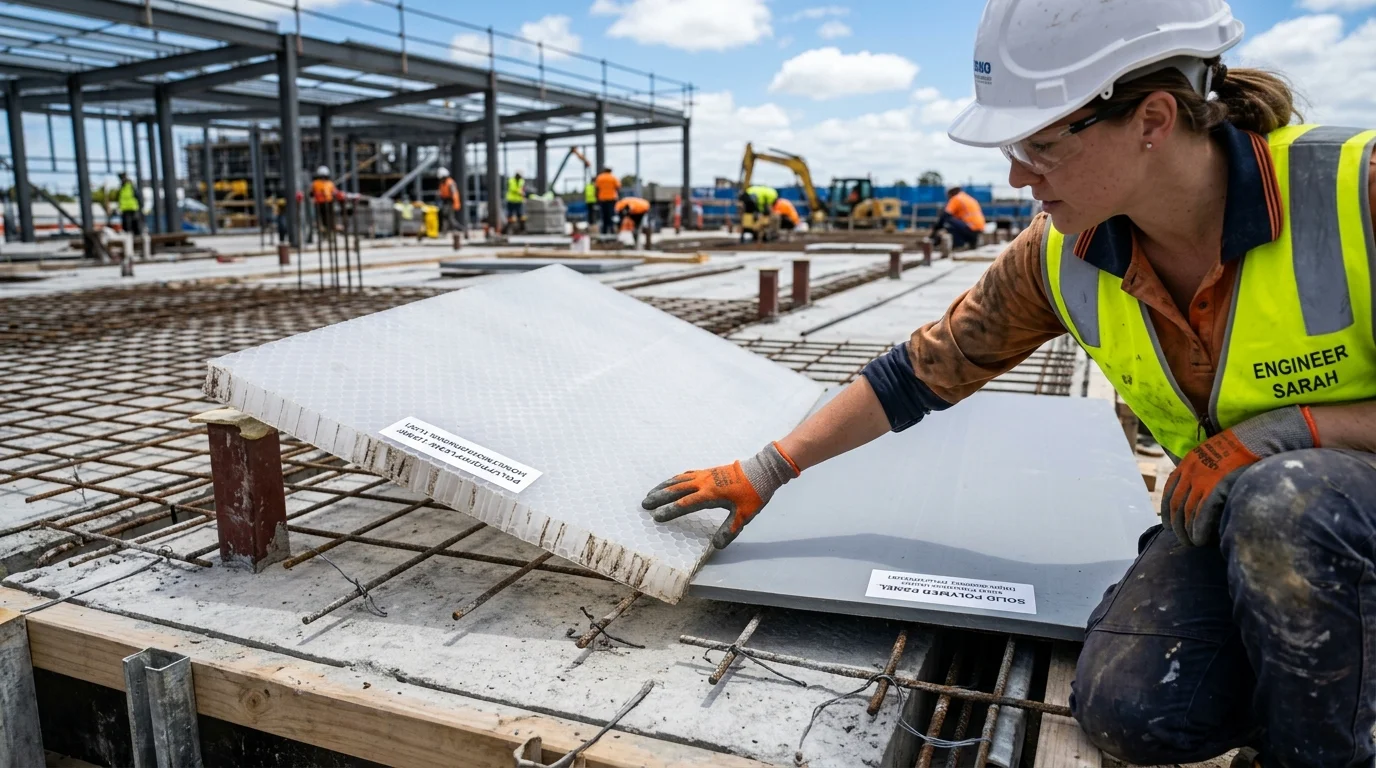
8 Core Differences Between Plastic Formwork and Plywood
A comprehensive engineering breakdown comparing hollowcore polypropylene formwork panels against timber plywood across 8 core physical and chemical criteria.
Toutes les clés techniques et financières avant d’investir : comparatif des matériaux, règles pour 60+ réemplois, amortissement, gains de productivité et recyclabilité.
An essential civil engineering guide exploring plastic formwork plywood: raw materials (PP vs PVC), cellular core advantages, zero water absorption, and 60+ reuse cycles on concrete jobsites.
Why leading contractors and site engineers are replacing traditional timber plywood with polymer formwork boards: zero water absorption, 60+ reuse cycles, plastering elimination, lightweight fixed ergonomics, and overwhelming 50-pour lifecycle ROI.
Élaborés à partir de données de chantier réelles, d’essais en laboratoire et de bilans économiques.
A comprehensive engineering breakdown comparing hollowcore polypropylene formwork panels against timber plywood across 8 core physical and chemical criteria.

Purchase price is only the visible part of formwork expenditure. Explore the mathematical formula for calculating cost-per-pour amortisation across 50 cycles, including release oil and plastering savings.
How to reliably exceed 60 pours on multi-story jobsites: support spans (25-30 cm), edge nailing guidelines, vibrator clearance, and thermal dilation control.
A project-tailored material decision guide: when film-faced birch plywood remains practical versus when polypropylene panels deliver overwhelming technical ROI.
Detailed productivity analysis demonstrating how 24.5 kg fixed-weight polymer panels, effortless stripping, and plaster-free finishes accelerate overall project delivery.
An environmental impact report exploring how 100% recyclable thermoplastic formwork prevents timber depletion and earns vital LEED v4 and BREEAM waste diversion credits.
A technical comparison between cellular polypropylene (PP) and solid PVC formwork boards: density, cold-weather brittleness, nailing resilience, and lifecycle recycling economics.
Why 18mm thickness is the industry standard for polymer shuttering: H20 beam spacing, DIN 18218 deflection limits, acceptance testing, and turnkey tender clauses.
A practical civil quantity surveyor guide to calculating exact formwork sheets needed: gross floor to shuttering area multipliers, waste allowances, and floor turnaround sets.
Engineering protocol for polymer formwork under extreme weather: summer thermal dilation (2mm gap rule), sub-zero cold impact handling, steam curing, and storage.
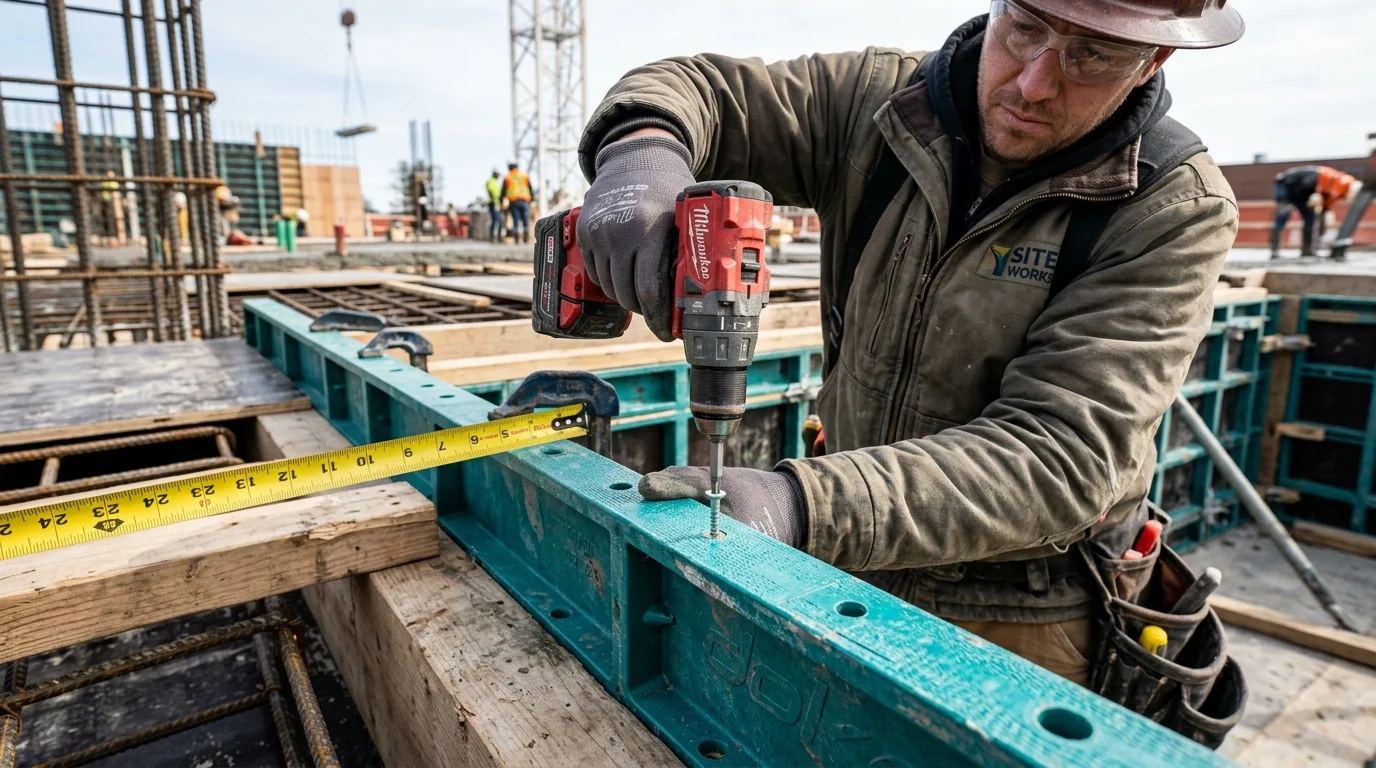
Nailing vs screwing on polymer shuttering: edge clearance rules, countersunk torx fasteners, stripping crowbar protocols, and preventing panel edge tear-out.
Do polymer boards require chemical release agents? Explore the non-stick hydrophobic surface physics delivering immaculate fair-faced architectural concrete with zero staining.
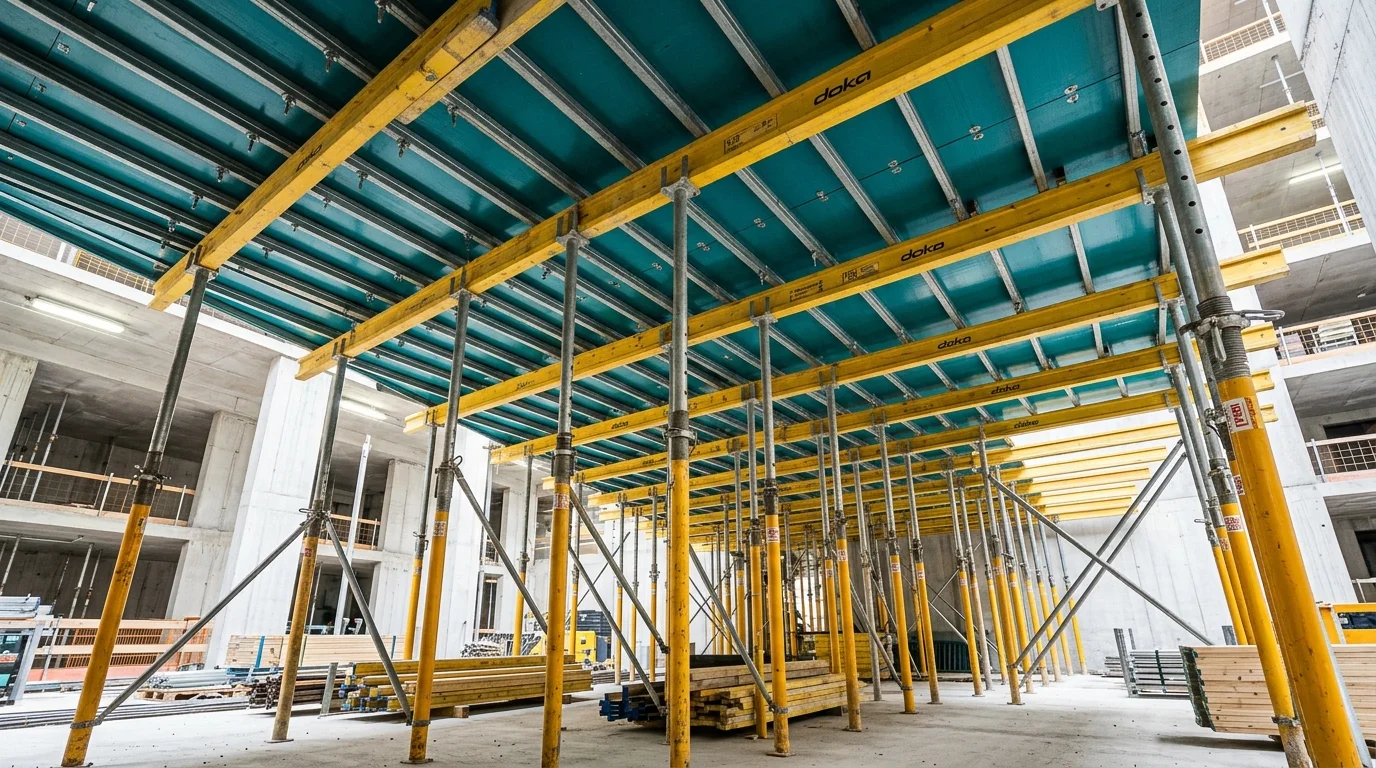
Civil calculations determining exact H20 timber beam support spacing under varied slab thicknesses (15cm to 35cm) ensuring zero formwork flexure within L/400 limits.
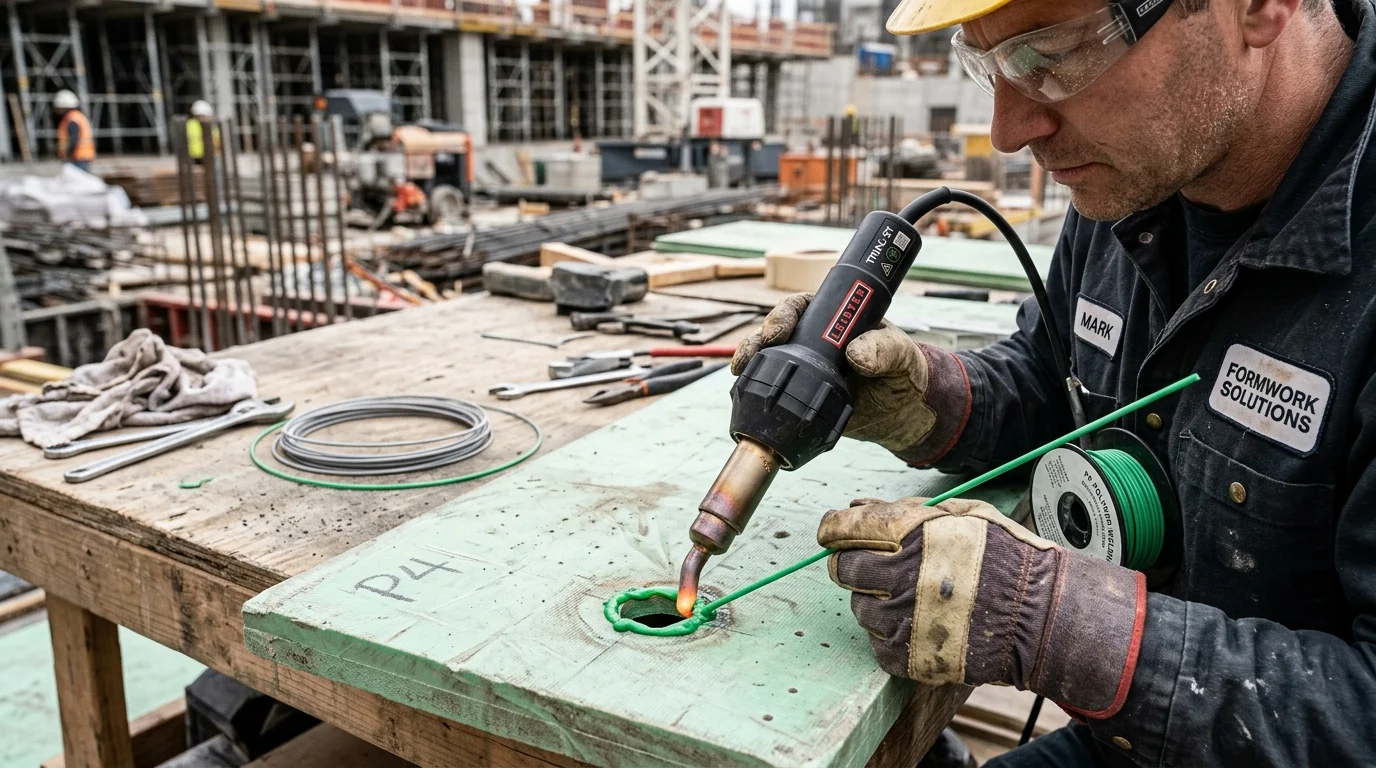
A hands-on civil maintenance protocol: high-pressure water blasting (150 bar), avoiding metal scraping, and hot-air extrusion welding to patch tie-rod holes effortlessly.
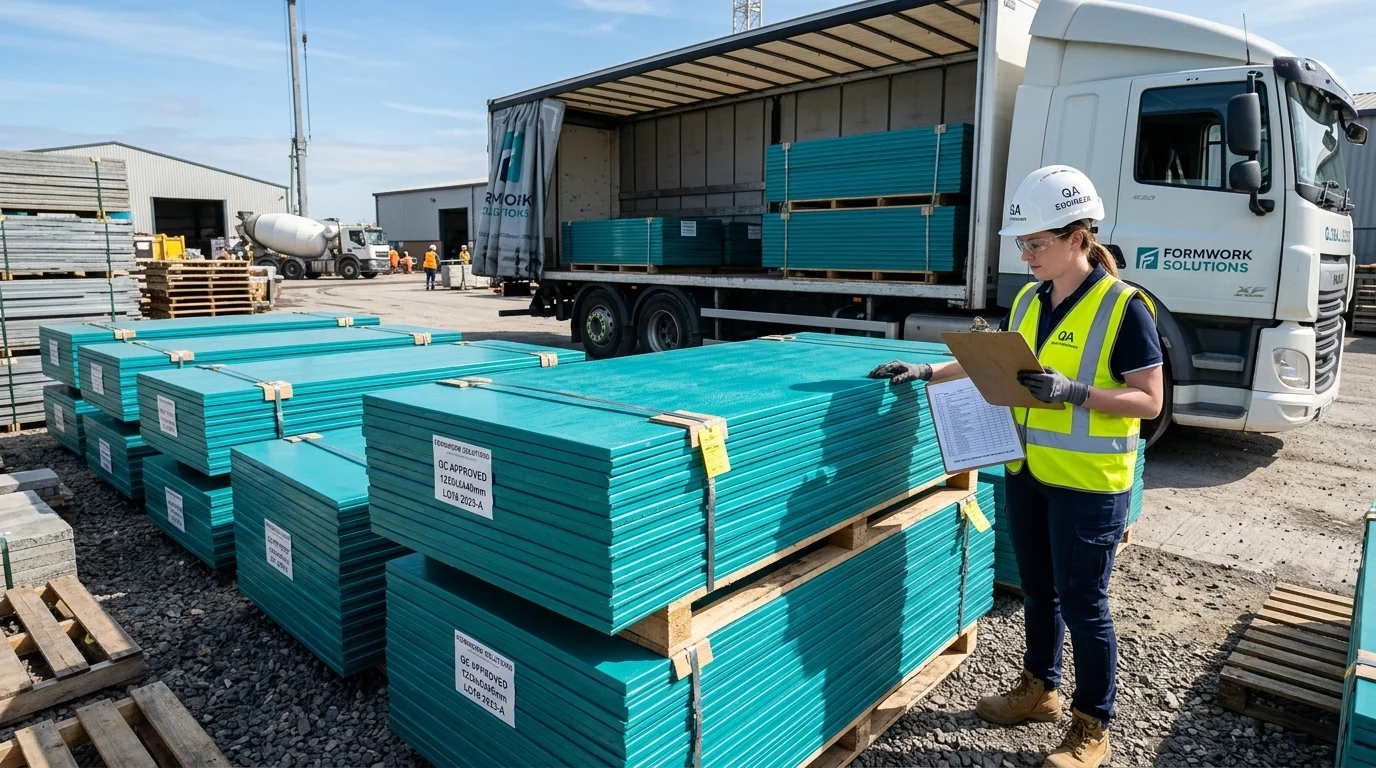
A civil engineering QA checklist for incoming truck deliveries: pallet strapping, digital caliper thickness verification, squareness checks, and receiving sign-off.
Tout savoir sur le choix des panneaux, les réutilisations, les fiches techniques et la logistique.
C'est une appellation commerciale courante désignant les panneaux polymères pour coffrage béton. L'évaluation requiert d'examiner le type de polymère (PP ou PVC), la structure interne, les dimensions et les recommandations d'emploi.
Non, ce sont des familles de matériaux distinctes. Une épaisseur identique ne garantit pas un poids, une rigidité ou des conditions d'appui similaires ; ils doivent être comparés selon leurs fiches techniques.
Selon la rigueur de manipulation, le soin apporté au décoffrage et le stockage, les panneaux atteignent couramment 40 à 80+ réemplois, constatés sur de nombreux chantiers.
Le prix est établi selon le type de polymère (PP/PVC), l'épaisseur (15, 18, 21 mm), le volume commandé (panneaux, palettes, camions complets) et le lieu de livraison convenu.
En consultant les déclarations du fabricant et les fiches environnementales. Les taux de matière recyclée variant selon les formulations, SerPlywood fournit les justificatifs et attestations techniques appropriés.
L'insensibilité à l'eau est un atout majeur face au bois (aucun gonflement ni dégradation). Cependant, la maîtrise de la flèche sous charge et la dilatation thermique restent indispensables.
Indiquez les dimensions, l'épaisseur, la quantité estimée et le lieu de livraison pour obtenir une offre détaillée.