8 Core Differences Between Plastic Formwork and Plywood
A comprehensive engineering breakdown comparing hollowcore polypropylene formwork panels against timber plywood across 8 core physical and chemical criteria.

Everything you need to evaluate before investing in polymer formwork boards: core material comparisons, 60+ pour guidelines, amortisation economics, jobsite productivity metrics, and circular sustainability data.
An essential civil engineering guide exploring plastic formwork plywood: raw materials (PP vs PVC), cellular core advantages, zero water absorption, and 60+ reuse cycles on concrete jobsites.
Why leading contractors and site engineers are replacing traditional timber plywood with polymer formwork boards: zero water absorption, 60+ reuse cycles, plastering elimination, lightweight fixed ergonomics, and overwhelming 50-pour lifecycle ROI.
Engineered with real jobsite data, lab tests, and lifecycle cost models.
A comprehensive engineering breakdown comparing hollowcore polypropylene formwork panels against timber plywood across 8 core physical and chemical criteria.

Purchase price is only the visible part of formwork expenditure. Explore the mathematical formula for calculating cost-per-pour amortisation across 50 cycles, including release oil and plastering savings.
How to reliably exceed 60 pours on multi-story jobsites: support spans (25-30 cm), edge nailing guidelines, vibrator clearance, and thermal dilation control.
A project-tailored material decision guide: when film-faced birch plywood remains practical versus when polypropylene panels deliver overwhelming technical ROI.
Detailed productivity analysis demonstrating how 24.5 kg fixed-weight polymer panels, effortless stripping, and plaster-free finishes accelerate overall project delivery.
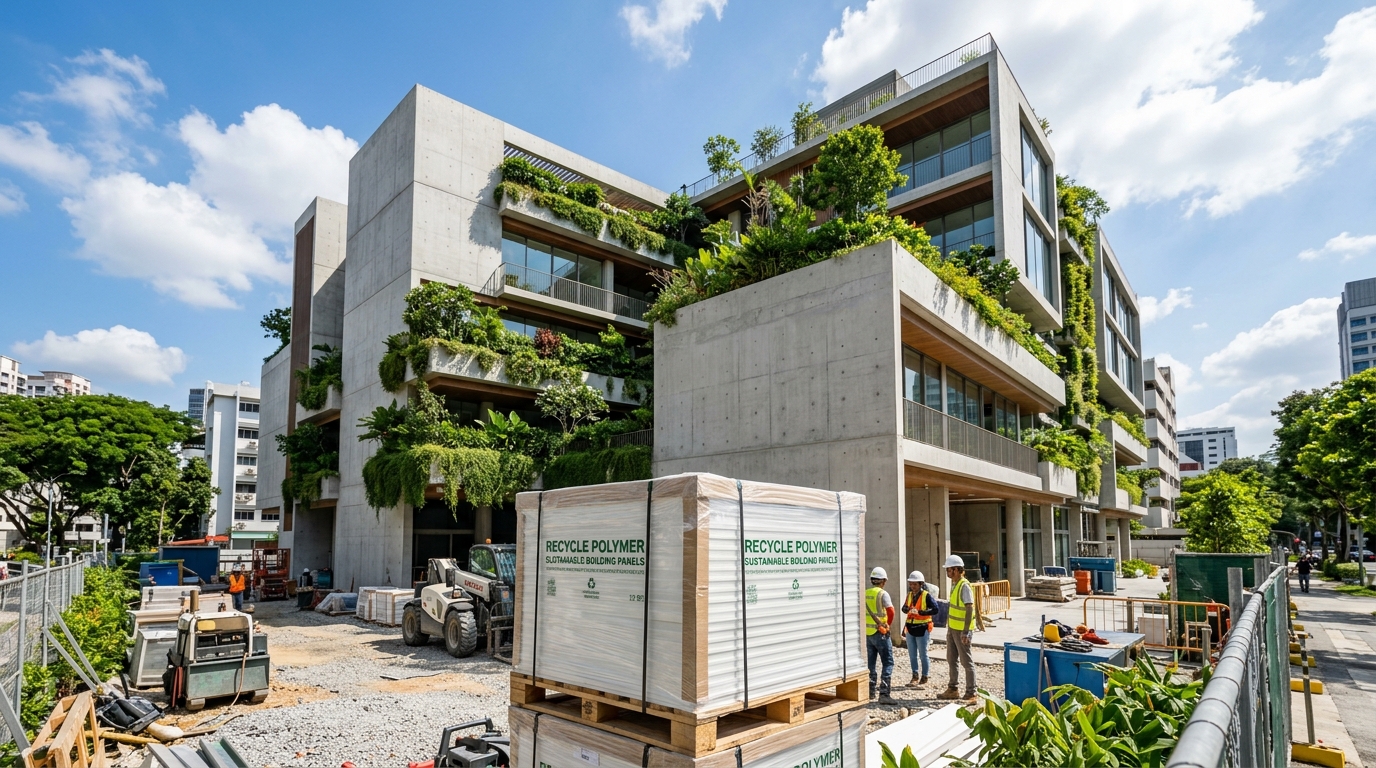
An environmental impact report exploring how 100% recyclable thermoplastic formwork prevents timber depletion and earns vital LEED v4 and BREEAM waste diversion credits.
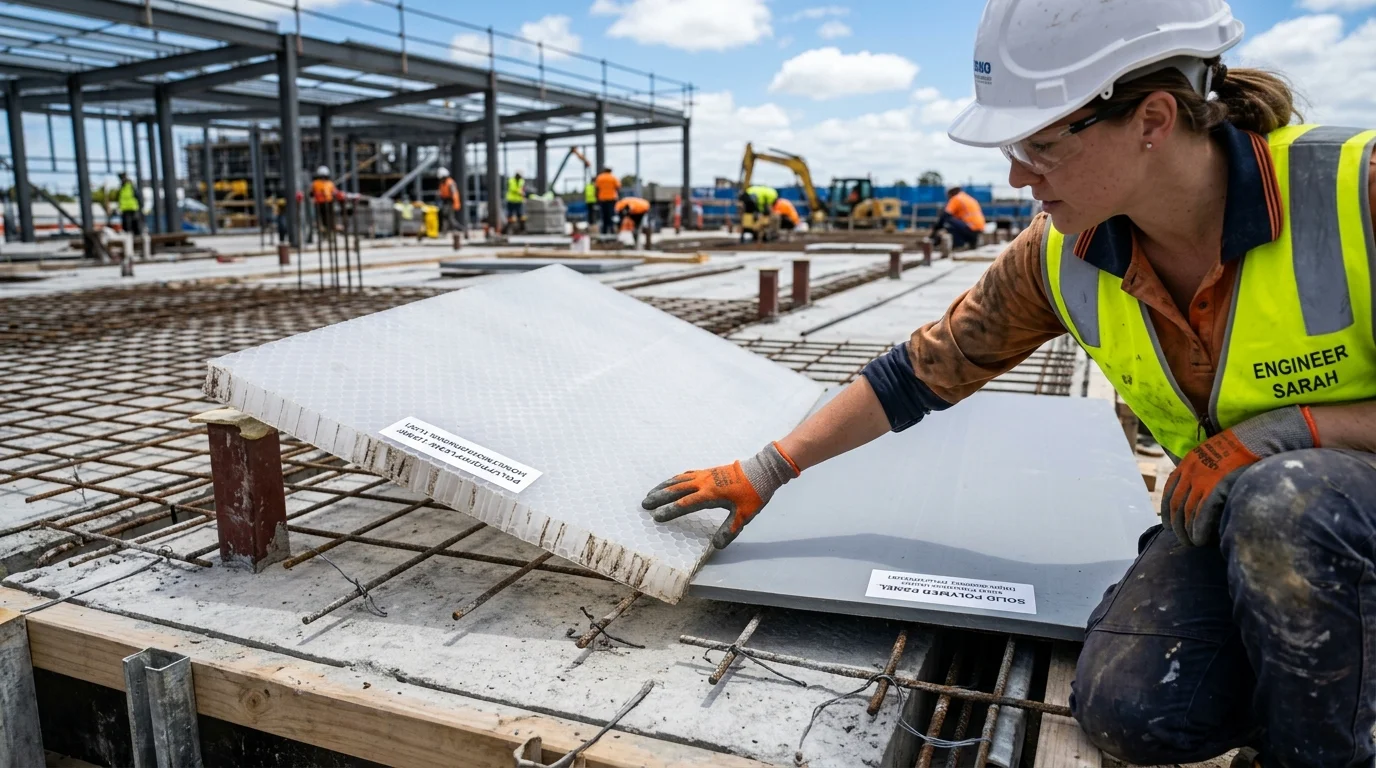
A technical comparison between cellular polypropylene (PP) and solid PVC formwork boards: density, cold-weather brittleness, nailing resilience, and lifecycle recycling economics.
Why 18mm thickness is the industry standard for polymer shuttering: H20 beam spacing, DIN 18218 deflection limits, acceptance testing, and turnkey tender clauses.
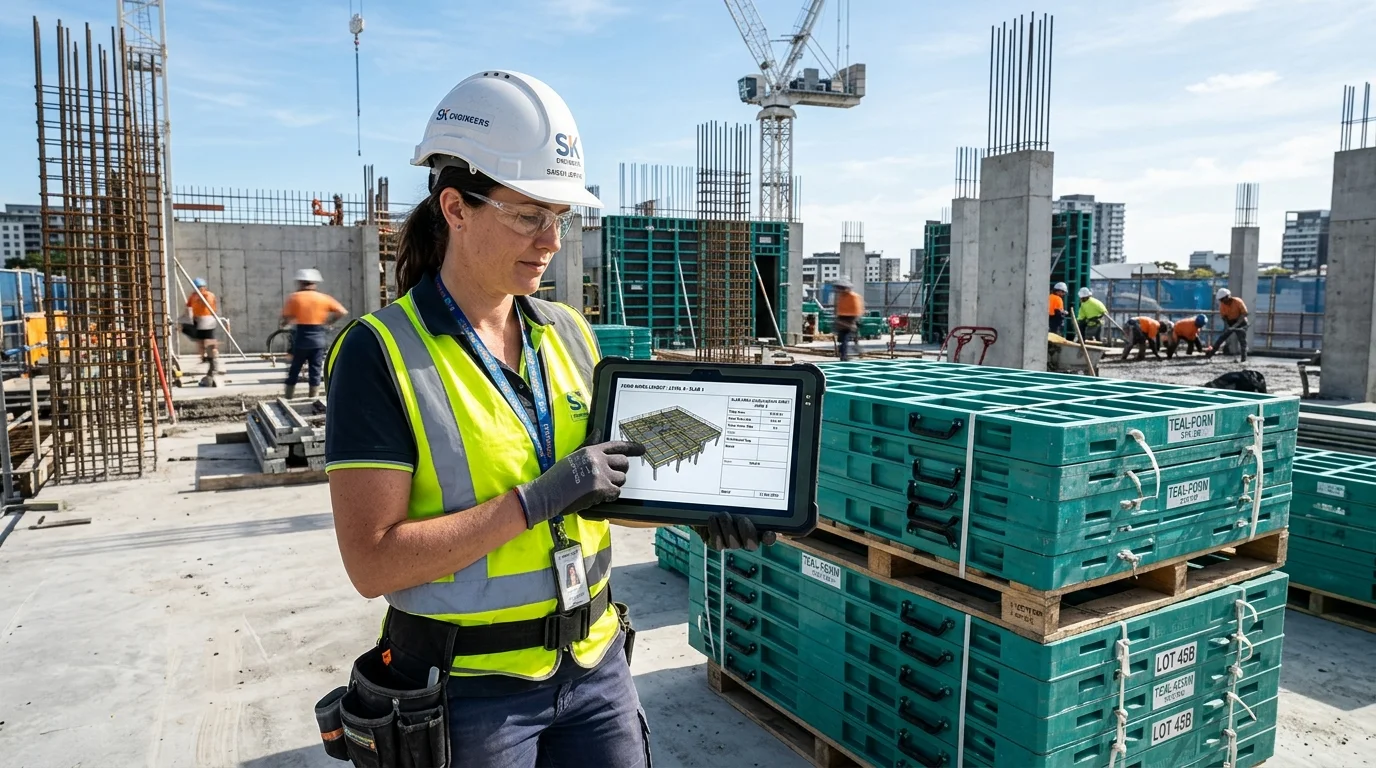
A practical civil quantity surveyor guide to calculating exact formwork sheets needed: gross floor to shuttering area multipliers, waste allowances, and floor turnaround sets.
Engineering protocol for polymer formwork under extreme weather: summer thermal dilation (2mm gap rule), sub-zero cold impact handling, steam curing, and storage.
Nailing vs screwing on polymer shuttering: edge clearance rules, countersunk torx fasteners, stripping crowbar protocols, and preventing panel edge tear-out.
Do polymer boards require chemical release agents? Explore the non-stick hydrophobic surface physics delivering immaculate fair-faced architectural concrete with zero staining.
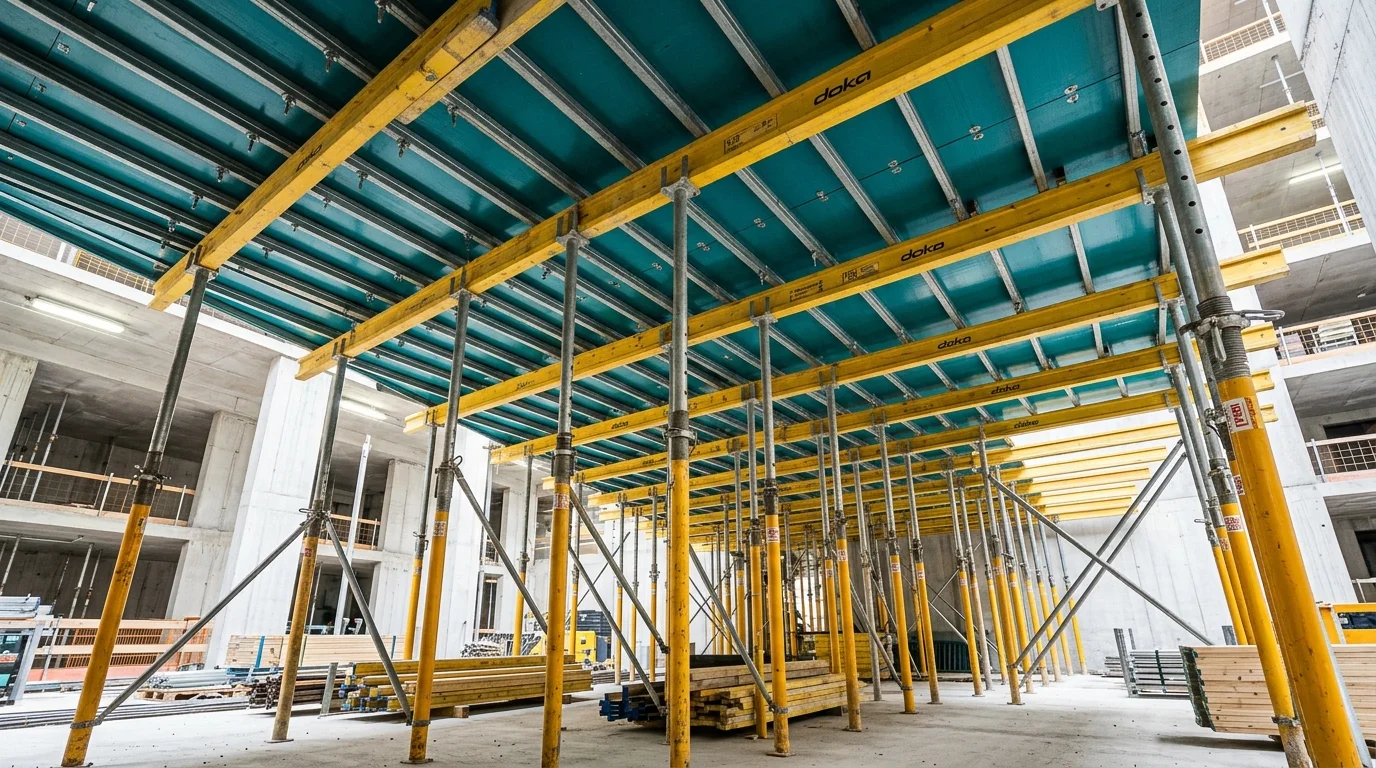
Civil calculations determining exact H20 timber beam support spacing under varied slab thicknesses (15cm to 35cm) ensuring zero formwork flexure within L/400 limits.
A hands-on civil maintenance protocol: high-pressure water blasting (150 bar), avoiding metal scraping, and hot-air extrusion welding to patch tie-rod holes effortlessly.
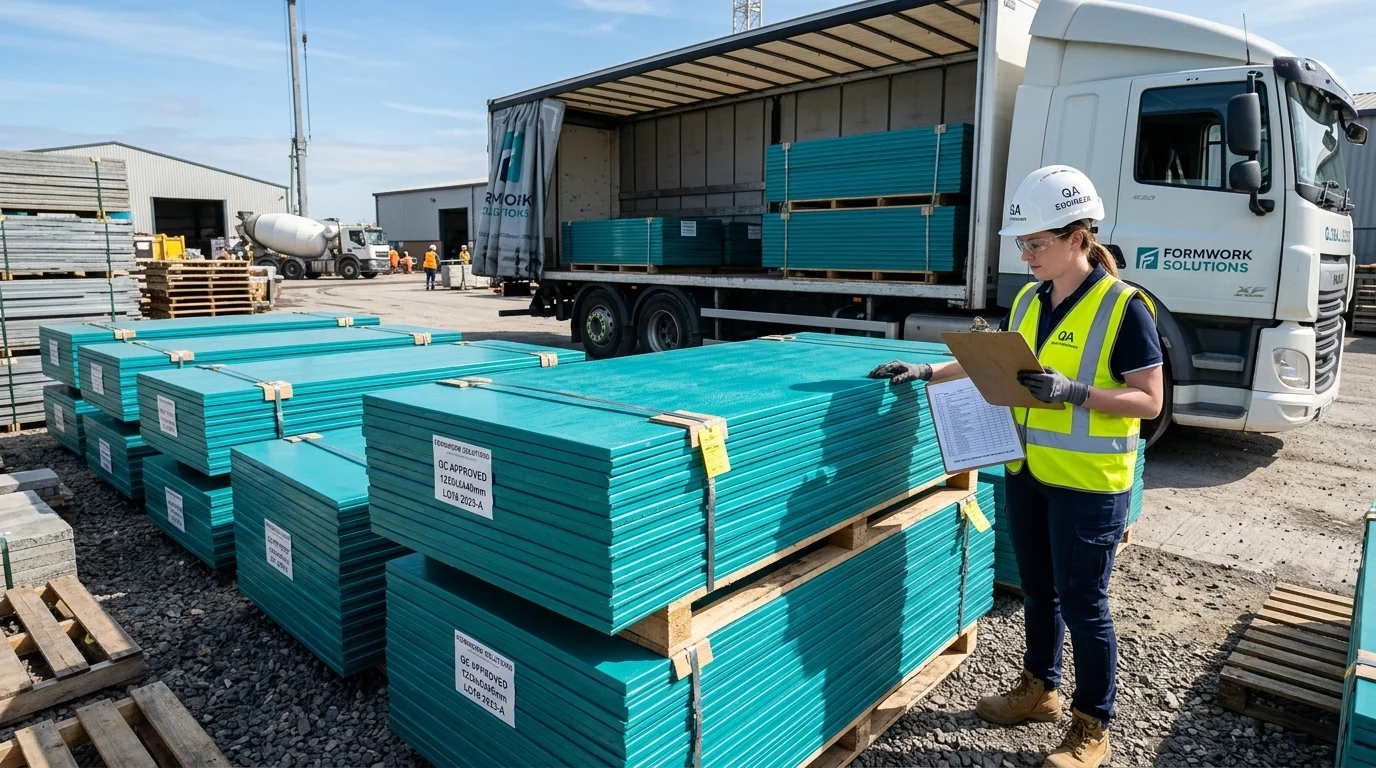
A civil engineering QA checklist for incoming truck deliveries: pallet strapping, digital caliper thickness verification, squareness checks, and receiving sign-off.
Common questions regarding board selection, reuse cycles, technical parameters, and global delivery.
It is a widely used commercial term for polymer sheets used as concrete formwork facing. When evaluating the product, the polymer type (PP or PVC), internal cross-section, dimensions, and manufacturer instructions must be assessed together.
No, they belong to different material families. Having the same nominal thickness does not imply identical weight, stiffness, or handling conditions; products should be compared using verified technical data.
Depending on jobsite practices, handling care, and stripping discipline, boards achieve between 40 and 80+ concrete pours. This is a field-observed operational range under proper maintenance rather than an unconditional guarantee.
Pricing is determined by polymer type (PP/PVC), thickness (15, 18, 21 mm), order volume (sheets, pallets, full container/truckload), and delivery terms (jobsite, warehouse, or seaport).
Manufacturer declarations and technical compliance certificates must be examined. Recycled content ratios and polymer origins vary, and SerPlywood provides verified technical documentation for material compliance.
Water resistance is the greatest advantage over timber (zero swelling or delamination). However, deflection under load and thermal expansion must still be engineered properly.
Share your required board dimensions, thickness, estimated quantity and delivery destination for a clearly scoped quotation.