
SERPLYWOOD · CORE GUIDE
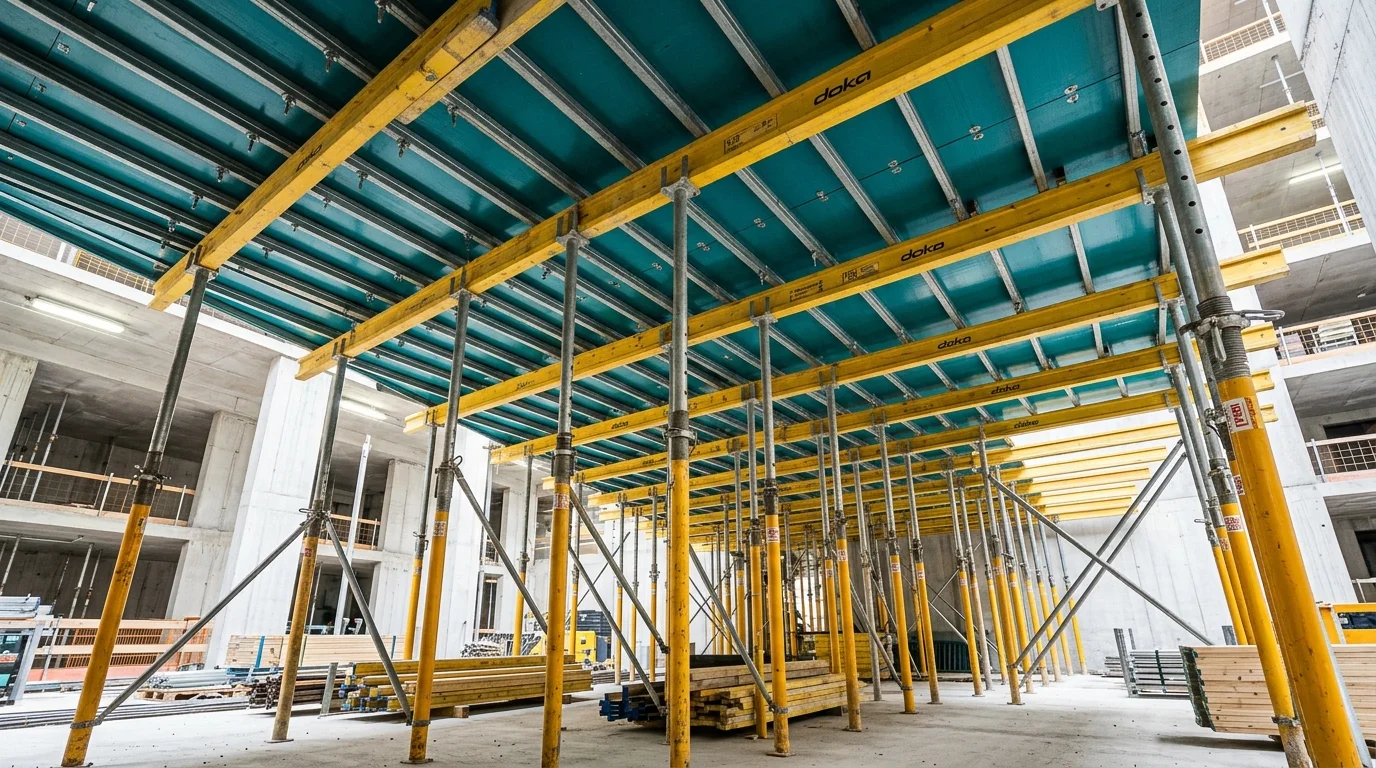
With wet concrete weighing 25 kN/m³, supporting falsework spacing cannot be generalized. Spans must be calibrated against slab thickness to restrict flexure to L/400.
Share your structural slab schedules and our civil engineers will generate certified H20 girder layout plans.
Common questions regarding board selection, reuse cycles, technical parameters, and global delivery.
They describe the internal cross-sectional geometry of the board. Honeycomb and cellular structures provide lightweight handling, while solid core boards offer different deflection and impact dynamics.
The operating model is specialized polymer formwork procurement, supply, and direct project delivery. Manufacturing and authorized distribution credentials are fully specified within institutional documentation.
Thickness alone does not determine full suitability. Polymer structure, fresh concrete hydrostatic pressure, support joist spacing, and framing connections must be evaluated within a proper formwork design.
There is no single support spacing applicable to all polymer boards. It must be determined from the manufacturer load-deflection tables and permissible deflection limits (e.g. L/500) for the specific concrete slab thickness.
Thermopolymers expand in heat and gain rigidity in severe cold. Therefore, an expansion joint gap (1.5 – 2 mm) recommended by the manufacturer should be maintained at board joints.
Yes, they can be easily cut using standard circular saws or hand woodworking tools. Using a blade with appropriate teeth ensures clean, burr-free edges.
Share your required board dimensions, thickness, estimated quantity and delivery destination for a clearly scoped quotation.