Plastic Formwork for Architectural Fair-Faced Concrete
When architectural designs require uniform texture without timber grain, discoloration, or patch marks, SerPlywood produces a marble-smooth fair-faced concrete finish that eliminates plastering entirely.
Fair-Faced Concrete Surface Performance: Plywood vs SerPlywood
Conventional film-faced timber plywood suffers from surface scratches, swelling, and capillary water absorption, creating discolored concrete patches. SerPlywood polymer boards absorb zero water from concrete, ensuring uniform cement hydration and color consistency:
| Performance Criteria | Standard Film-Faced Plywood | SerPlywood Polymer Formwork Board | Architectural Advantage |
|---|---|---|---|
| Water Absorption from Concrete | 8 – 15% (Waterlogged, swells) | 0.00% (Zero water absorption) | Uniform Curing & Color |
| Surface Texture | Wood grain & film patches transfer | Marble-smooth mirror finish | Mirror Finish (SB3) |
| Release Agent Consumption | High (heavy oiling needed) | 70 – 80% lower consumption | Zero Oil Stains |
| Joint Grout Leak & Flash Lines | Slurry leakage from edge swelling | Sharp millimeter joint alignment | Flash-Free Edges |
| Plastering & Skim Remediation | Plastering or skim coat compulsory | Ready for direct paint / exposed as-is | 100% Cost Savings |
| Multi-Pour Surface Consistency | Dulls and degrades after 3-5 casts | Consistent finish over 50+ pours | Consistent Quality |
The shade of concrete is determined by the water/cement ratio during hydration. When timber plywood absorbs water locally, it causes dark and light blotches. Because SerPlywood absorbs 0.00% water, the entire concrete surface cures in a single uniform tone.
SerPlywood Concrete Finish vs Conventional Formwork Finish
- Mirror Smoothness: Non-porous polymer yields a silky marble-smooth finish.
- 0.00% Water Absorption: Preserves mix water for a uniform, stain-free grey tone.
- Zero Plaster Costs: Ready for direct primer/paint; eliminates wall plastering entirely.
- Crisp Edges: Grout-tight joints deliver razor-sharp chamfer lines without flash.
- ✕ Wavy & Grain-Marked: Film peeling and knot impressions transfer onto the concrete.
- ✕ Blotchy Discoloration: Uneven moisture suction and heavy oil cause unsightly dark/yellow stains.
- ✕ Expensive Plastering: Rough surfaces necessitate heavy skim coats and grinding labor.
- ✕ Grout Leakage & Bleeding: Swollen timber edges leak slurry, causing honeycombing and broken edges.
Form Release Agent Selection & Surface Cleanliness
Key release agent application guidelines to prevent staining, discoloration, and bugholes in architectural concrete:
1. Water-Based / Bio Release Agents
Eco-friendly vegetable or synthetic emulsion release agents should be favored over heavy mineral oils. They prevent yellow or brown chemical discoloration.
2. Micron-Thin Spray Application
Apply using a fine-nozzle pressurized sprayer instead of rollers. Never allow release agent to puddle, bead up, or pool on the board face.
3. Wipe Excess Film with Microfiber
Because polymer boards naturally resist adhesion, minimal oil is required. Wipe with a cloth or sponge to remove excess liquid, leaving only a microscopic film.
Step-by-Step Architectural Fair-Faced Concrete Guide
6 professional steps to achieve flawless architectural exposed concrete:
Joint Alignment & Rear Screwing
Draw architectural gridlines. Screw polymer sheets from the back of the frame to eliminate all screwhead imprints on the finished concrete.
Compressible Sealing Gaskets
Apply thin self-adhesive sealing tape along all panel joints and tie-rod perimeters to prevent cement grout leakage.
Full-Scale Field Mock-Up Cast
Cast a 1:1 jobsite mock-up panel before mass pouring; verify mix design, aggregate shade, hydration rate, and sheen with the project architect.
Micron-Thin Release Agent Oiling
Apply vegetable-based release agent with a fine mist sprayer. Wipe excess oil with a cotton cloth for a spotless non-staining surface.
Controlled Vertical Vibration
Insert internal vibrator vertically at 40-50 cm intervals and withdraw slowly to draw entrained air bubbles away from the form face.
Careful Stripping & Surface Care
Never use pry bars directly against the board face during stripping. Protect fresh fair-faced surfaces from direct scorching sun and impacts.
The formwork board is not the only variable in exposed concrete. Cement brand, fly ash content, aggregate color, and ambient temperature directly influence surface shade. Pouring a field mock-up panel with exact jobsite materials is an engineering standard.
Compatible Exposed Concrete Formwork Systems
Rear-Fastened Blind-Screwed Steel Panel Formwork
Engineered for mirror-smooth fair-faced architectural finishes.
Architectural H20 Beam Fair-Faced Formwork Panels
Engineered for mirror-smooth fair-faced architectural finishes.
Architectural Tie-Rod Systems with Conical Plugs
Engineered for mirror-smooth fair-faced architectural finishes.
Custom Patterned & Chamfered Facade Formwork
Engineered for mirror-smooth fair-faced architectural finishes.
Recommended Formwork Boards for This Application
Select the optimal board thickness based on hydrostatic pressure and required reuse cycles.
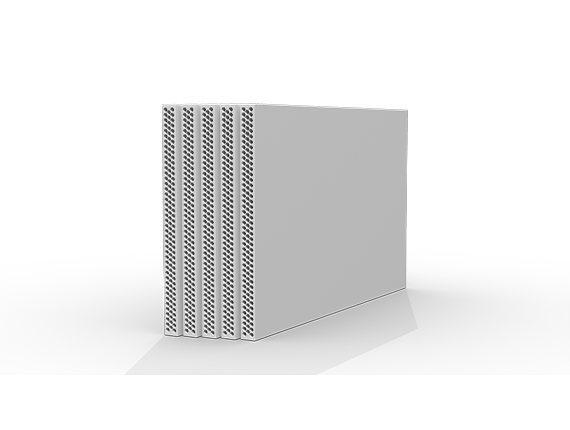
18 mm Plastic Plywood Formwork Board
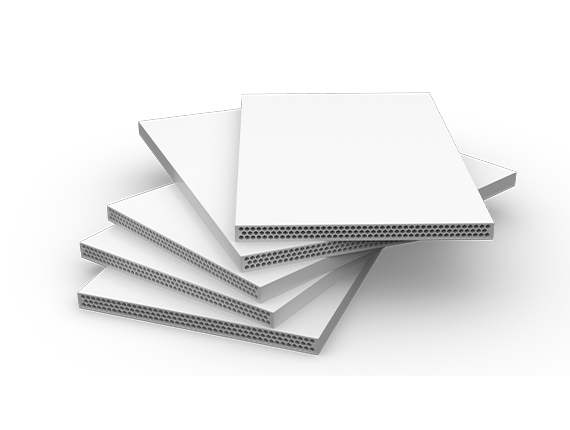
21 mm Plastic Plywood Formwork Board
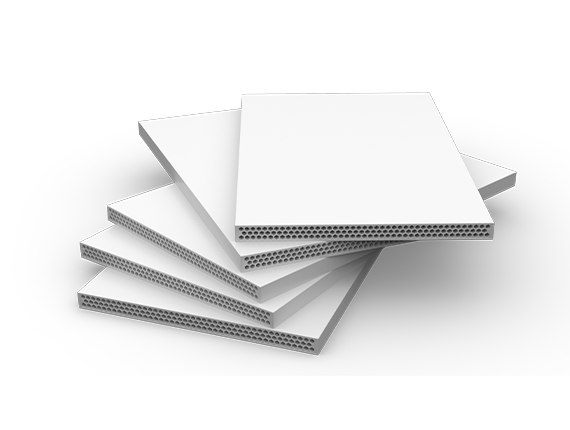
15 mm Plastic Plywood Formwork Board
Frequently Asked Questions
Technical answers on architectural standards, release agents, stain prevention, and mock-up panels.
Frequently Asked Questions
Common questions regarding board selection, reuse cycles, technical parameters, and global delivery.
Yes, its ultra-smooth, non-porous surface delivers superior exposed concrete finishes without requiring plastering. A representative on-site mock-up is recommended before full-scale deployment.
Because polymers do not chemically adhere to concrete, release agent requirements are minimal and often eliminated in routine pours. For pristine architectural finishes, a light water-based release agent may be applied.
Yes, surface gouges, deep scratches, or accidental drill holes can be easily repaired using hot-air polymer welding, welding rods, or polyurethane plugs, restoring a flush surface.
Boards should be stacked horizontally on flat timber dunnage or original shipping pallets. For prolonged outdoor storage, covering with protective tarpaulins prevents excessive thermal buildup.
SerPlywood plastic formwork boards are standardly produced in White (Standard White). Upon project requirements, Custom Gray and Custom Black options can also be manufactured.
Yes, product sample kits and pilot test boards are provided for contractors, developers, and engineering firms. You can submit an inquiry via our Sample Request form.
Other Concrete Formwork Engineering Guides
Explore panel selection, beam spacing, and deflection criteria for other structural elements.
Slab Formwork
In wide-span slabs, flat slabs, hollow-block and waffle systems, SerPlywood polymer boards maximize jobsite efficiency with zero water absorption, lightweight ergonomics (10.24 kg/m²), and 40-60+ reusable pour cycles.
Wall Formwork
In high-strength shear wall construction, SerPlywood polymer boards maintain dimensional stability against intense hydrostatic fresh concrete pressure (60-80 kN/m²), eliminate blowout around tie-rods, and deliver extended service life in steel-frame panels.
Column Formwork
Under fast pouring rates and heavy vibration, polymer boards ensure crisp column lines, sharp corner definition with PVC chamfers, and smooth plaster-free vertical surfaces.
Precast Elements
In precast factories and casting yards, polymer boards endure continuous steam curing (+65°C) and high-frequency vibration tables, providing 3 to 4 times longer lifespan than film-faced plywood.