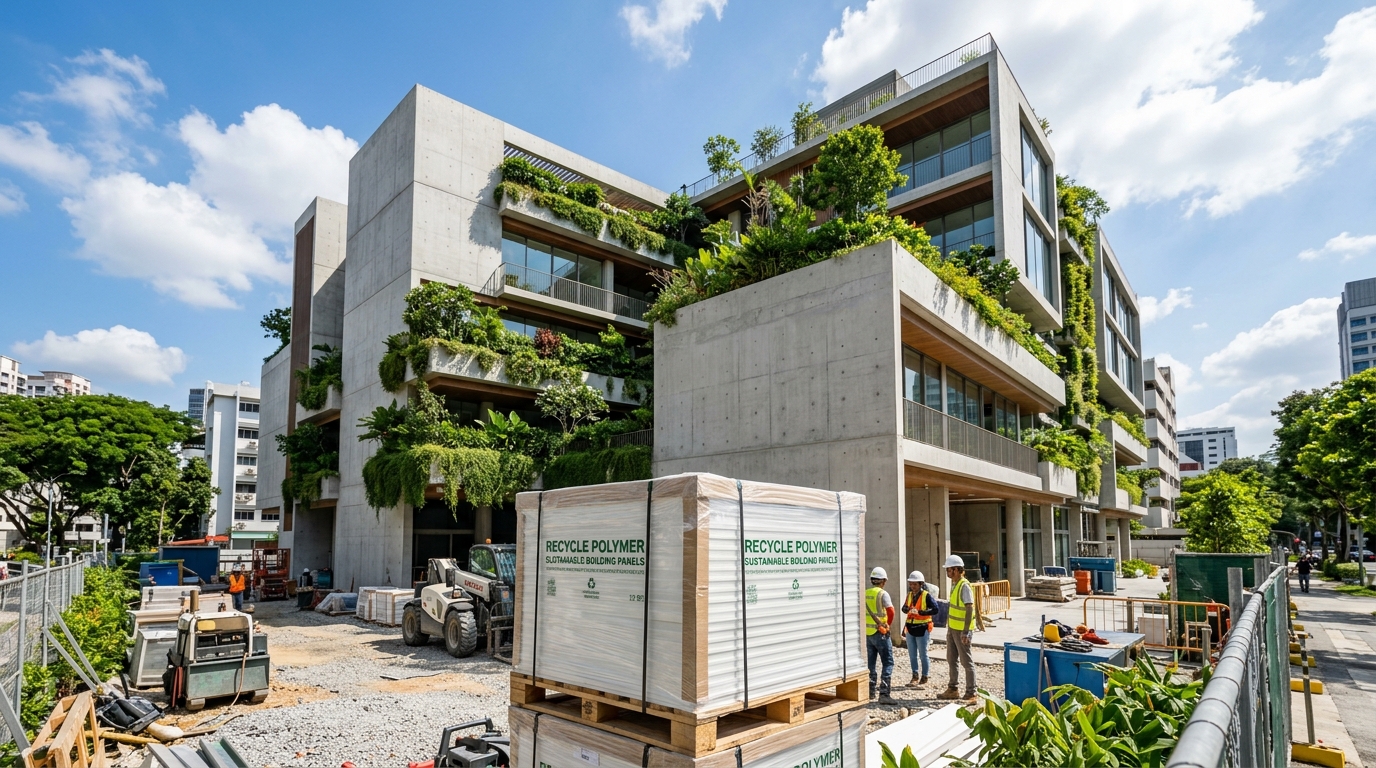
1. The Timber Crisis in Concrete Construction
The global building industry consumes millions of mature birch and poplar trees each year for disposable shuttering boards. In a standard 25,000 m² project, over 3,000 sheets of plywood are discarded into landfills after only 6 reuses. Bound with toxic phenol-formaldehyde glues, these cannot be composted or cleanly incinerated.
2. The 100% Recyclable Polypropylene Closed Loop
SerPlywood shuttering boards are engineered from thermoplastic polypropylene (PP), which can be remelted and pelletized indefinitely without molecular degradation. A single set surviving 60+ pours spares ~120 mature trees per 1,000 m² of slab area.
3. Direct Green Building Credits (LEED v4 & BREEAM)
- LEED v4 MRc5 (Construction Waste Management): Diverts up to 80% of formwork waste from regional landfills.
- LEED v4 MRc3 (Product Optimization): 100% recyclable circular materials credit.
- BREEAM Wst 01 (Site Waste Management): Highest rating for non-hazardous zero-scrap operations.
4. Zero Formaldehyde: Jobsite Health and Potable Water Safety
Polypropylene produces zero toxic dust or formaldehyde vapors when sawn on site. Certified chemically inert, it is universally approved for casting concrete in potable water reservoirs and food processing plants.
5. SerPlywood Scrap Buyback & Regranulation Framework
At the end of a project, damaged or retired boards are bought back by weight at active market polymer scrap rates. The material is washed, shredded, and compounded into new industrial accessories.
6. Conclusion: Shaping the Future of Green Construction
As EU Green Deal and global carbon taxonomy mandates phase out single-use jobsite plastics and timber waste, SerPlywood empowers forward-thinking developers with a truly circular, zero-waste formwork platform.
