
SERPLYWOOD · CORE GUIDE
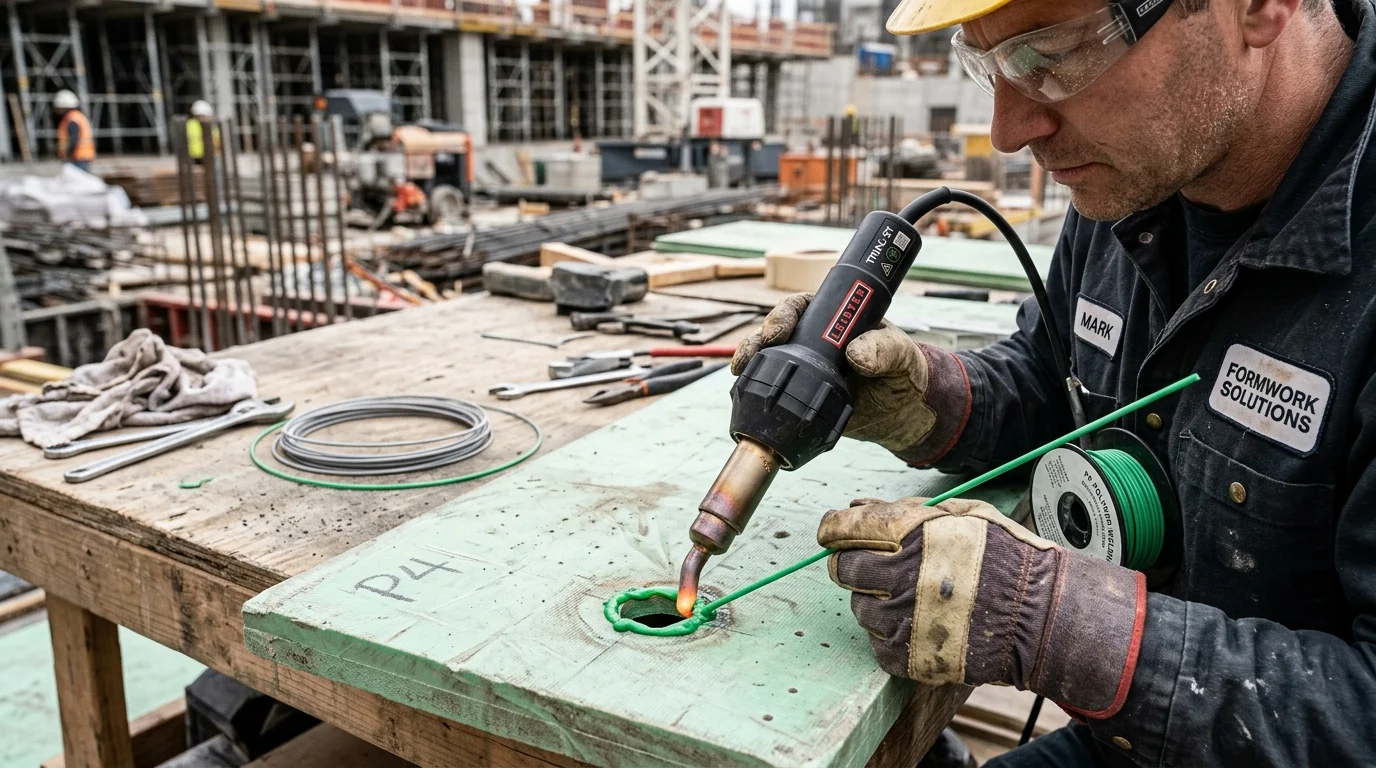
Timber plywood delaminates once punctured. In contrast, 100% thermoplastic SerPlywood panels can be seamlessly welded and patched on site using portable hot-air welding equipment.
Using a handheld plastic welding torch (Leister Triac at 240°C) with an original Ø 4 mm polypropylene welding rod, technicians fill through-holes and screw penetrations in under 60 seconds. Shaving the bead flush restores pristine concrete forming quality.
We provide genuine polypropylene welding rods and jobsite technical coaching for subcontractor crews.
Common questions regarding board selection, reuse cycles, technical parameters, and global delivery.
Inquire about the exact test conditions, framing support, concrete mix, and jobsite handling practices. Any figure should be corroborated with real site records and laboratory testing rather than arbitrary claims.
Because formwork lifespan heavily depends on site workmanship, crane handling, and stripping procedures, warranty scopes and technical terms are specified conditionally in formal quotation contracts.
Clean immediately after stripping using high-pressure water washing or plastic/wood scrapers. Avoid sharp metal scraping tools or heavy hammering to preserve the face texture.
Yes, surface gouges, deep scratches, or accidental drill holes can be easily repaired using hot-air polymer welding, welding rods, or polyurethane plugs, restoring a flush surface.
Boards should be stacked horizontally on flat timber dunnage or original shipping pallets. For prolonged outdoor storage, covering with protective tarpaulins prevents excessive thermal buildup.
Yes, product sample kits and pilot test boards are provided for contractors, developers, and engineering firms. You can submit an inquiry via our Sample Request form.
Share your required board dimensions, thickness, estimated quantity and delivery destination for a clearly scoped quotation.