
SERPLYWOOD · CORE GUIDE
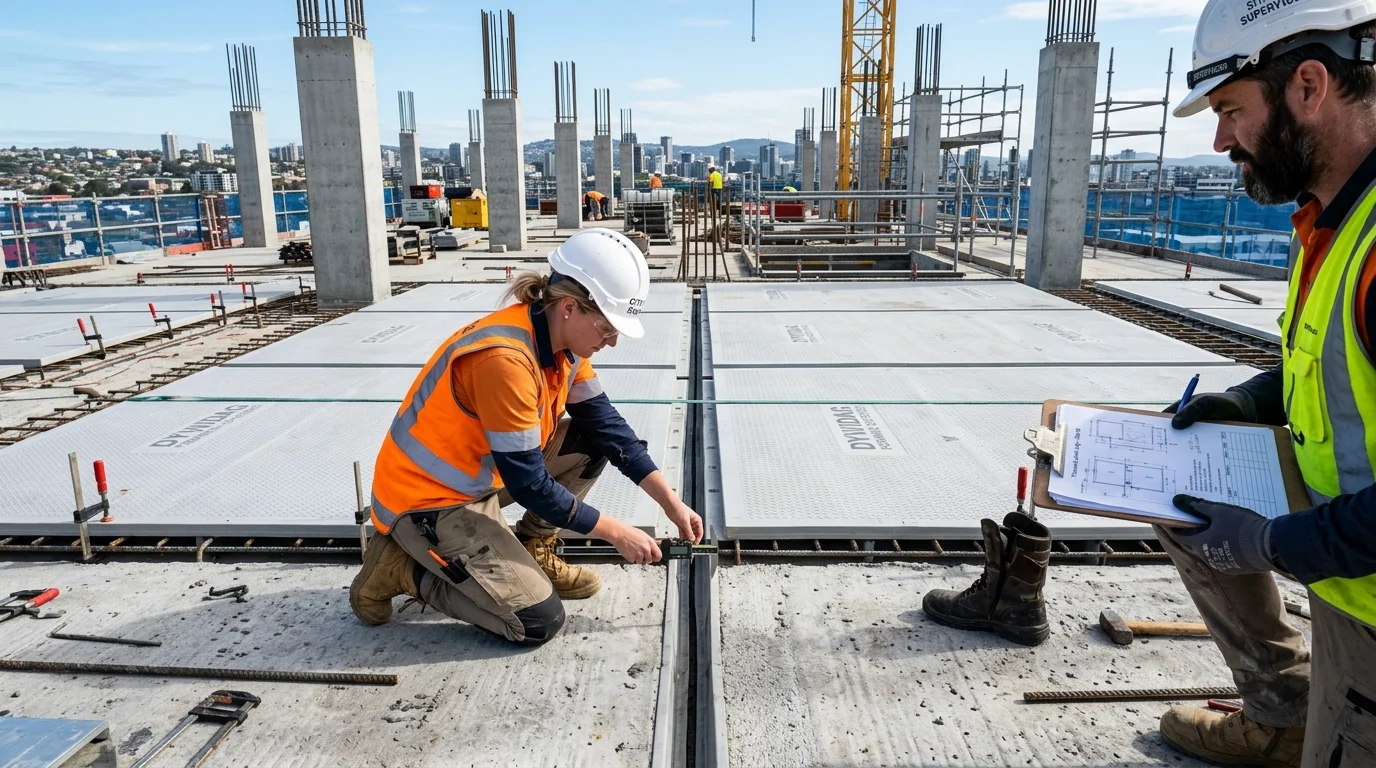
Unlike timber which swells irreversibly from moisture absorption, polymers exhibit predictable linear thermal expansion (α ≈ 1.2 × 10⁻⁴ K⁻¹). On a 2500 mm sheet, a 25°C temperature rise produces approximately 1.8–2.1 mm of elongation.
During hot summer installations, crew members must leave a 1.5 to 2.0 mm joint gap between adjacent sheet edges, sealed over with adhesive formwork tape. This prevents compressive buckling when sheets expand under direct afternoon solar radiation.
SerPlywood panels are formulated with specialized block copolymer resin that prevents cold embrittlement down to -20°C. Concrete vibrators and corner drops do not shatter or split the material, even in severe sub-zero winter concreting.
Equip your formwork foremen with our illustrated weather and joint handling reference poster.
Common questions regarding board selection, reuse cycles, technical parameters, and global delivery.
The polymer name alone is not a sufficient selection criterion. Internal cross-section (solid, honeycomb, or fluted), weight, test certificates, jobsite temperature ranges, and pricing must all be evaluated together.
Not always. Some hybrid products have a timber/plywood core with a plastic film or overlay. The core material and the surface must be evaluated separately. SerPlywood provides homogeneous solid/cellular polymer boards.
There is no single support spacing applicable to all polymer boards. It must be determined from the manufacturer load-deflection tables and permissible deflection limits (e.g. L/500) for the specific concrete slab thickness.
Yes, standard framing nails, screws, and formwork clamp fixings can be applied. The polymer structure grips fasteners securely and does not splinter, split, or delaminate after repeated fastening.
Yes, surface gouges, deep scratches, or accidental drill holes can be easily repaired using hot-air polymer welding, welding rods, or polyurethane plugs, restoring a flush surface.
Small hand samples are ideal for evaluating material density, surface finish, hardness, and waterproofing; full-span deflection and framing behaviors should be observed in actual site mock-ups.
Share your required board dimensions, thickness, estimated quantity and delivery destination for a clearly scoped quotation.